


Painting a Sense of Light | Brooke Olivares
by Brooke Olivares
When deciding what to paint, I find that I am often chasing the light. I look for how the light communicates the narrative or story, and how it sets the mood or tone of the subject. I think as an artist, it’s our individual stories that help influence what visual choices we find essential and what information we may choose to simplify or edit altogether. The reference for this scene is of my grandmother’s kitchen. The kitchen was her world. It’s where she made her flour tortillas from scratch and where she hosted countless gatherings. Anyone could stop over at any time for a meal or a visit. The warmth of the kitchen light is not only an accurate depiction of her environment but also a sentimental reflection of the woman who lived there.
In this particular piece, The Visitor, my goal was to capture the contrast of the cool overcast light streaming through the window as it meets the warmth of the interior light. I typically start with a small thumbnail in my sketchbook to feel out the composition and overall gesture and movement of the objects as they move through the space. I add in my values, especially the placement of the dark values, because the dark values tend to anchor the composition and tell me if the composition is balanced or not.
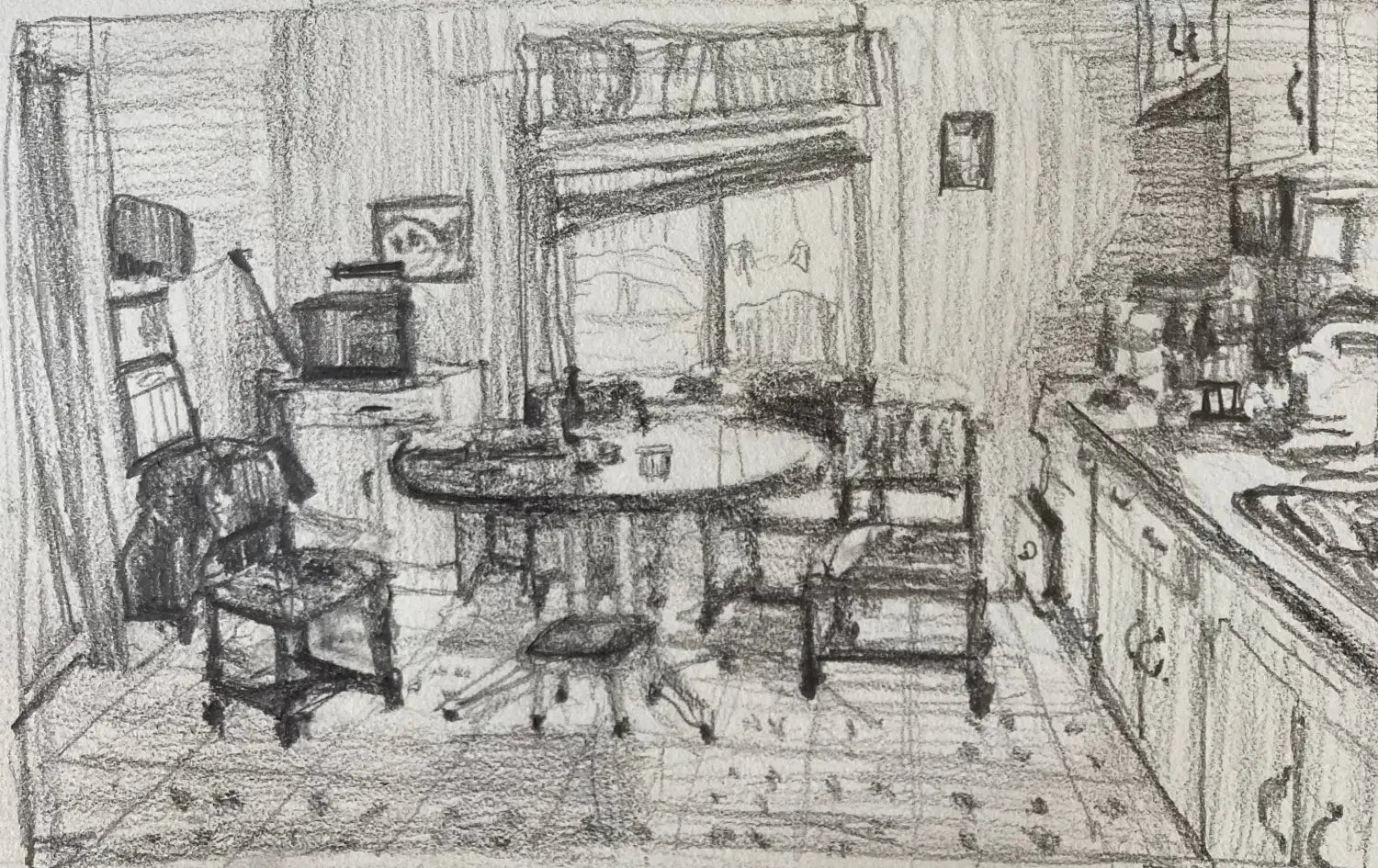
Once the thumbnail is settled I begin toning my canvas with a neutral mid-tone so that as the painting progresses, it allows the lighter values to really pop creating a sense of depth within the strokes. I begin by using a dark, neutral color to gesture in a loose drawing. This is where I work out my proportions and alignments to make sure placement and spacing is fairly accurate. I don't draw out every detail, just the big shapes or major elements. I don’t like to feel like I'm just coloring in my drawing. Rather, I prefer to paint boldly in the beginning, as this frees me up to take chances with the paint application.
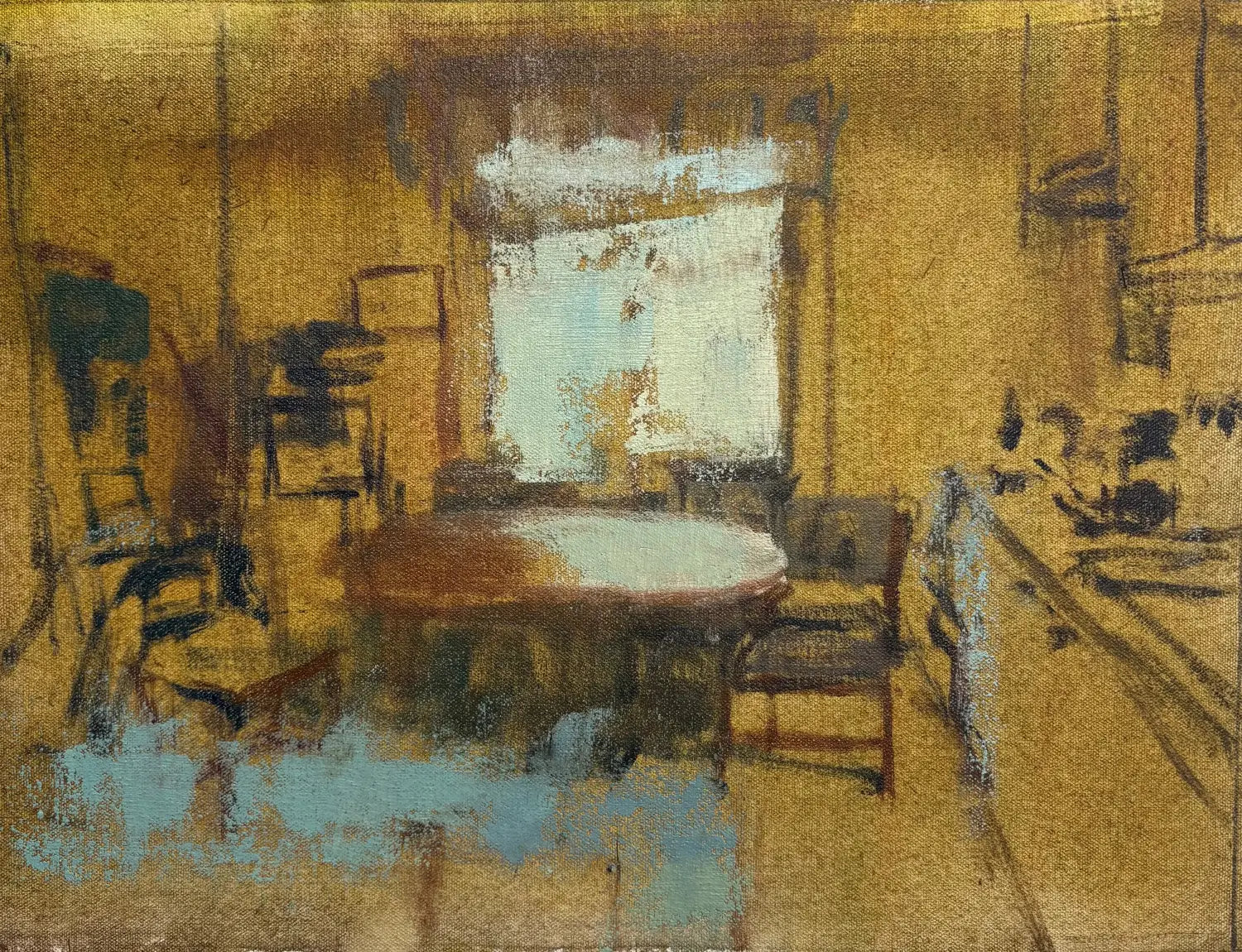
Next I begin the color block in, which for me, is the most exciting part of the process. Here, I start to establish my darks and to analyze my temperature relationships, starting with my biggest areas first. For example, the back walls, versus the window, the table versus the floor, etc.. I mass in big areas of color to make the initial statement, then work into smaller shapes of color in each area. I begin more out of focus and general and then get more specific as the painting progresses. In the early stages, your color doesn’t have to be perfectly accurate. It’s about you becoming acquainted with the color relationships and overall feel of the painting. I tend to paint areas slightly darker than they are at first, and work my way into the light as I go. In this painting the blue reflection on the floor from the window makes a big statement, so a lot of the other cool light in the painting is a less saturated variation of that blue.
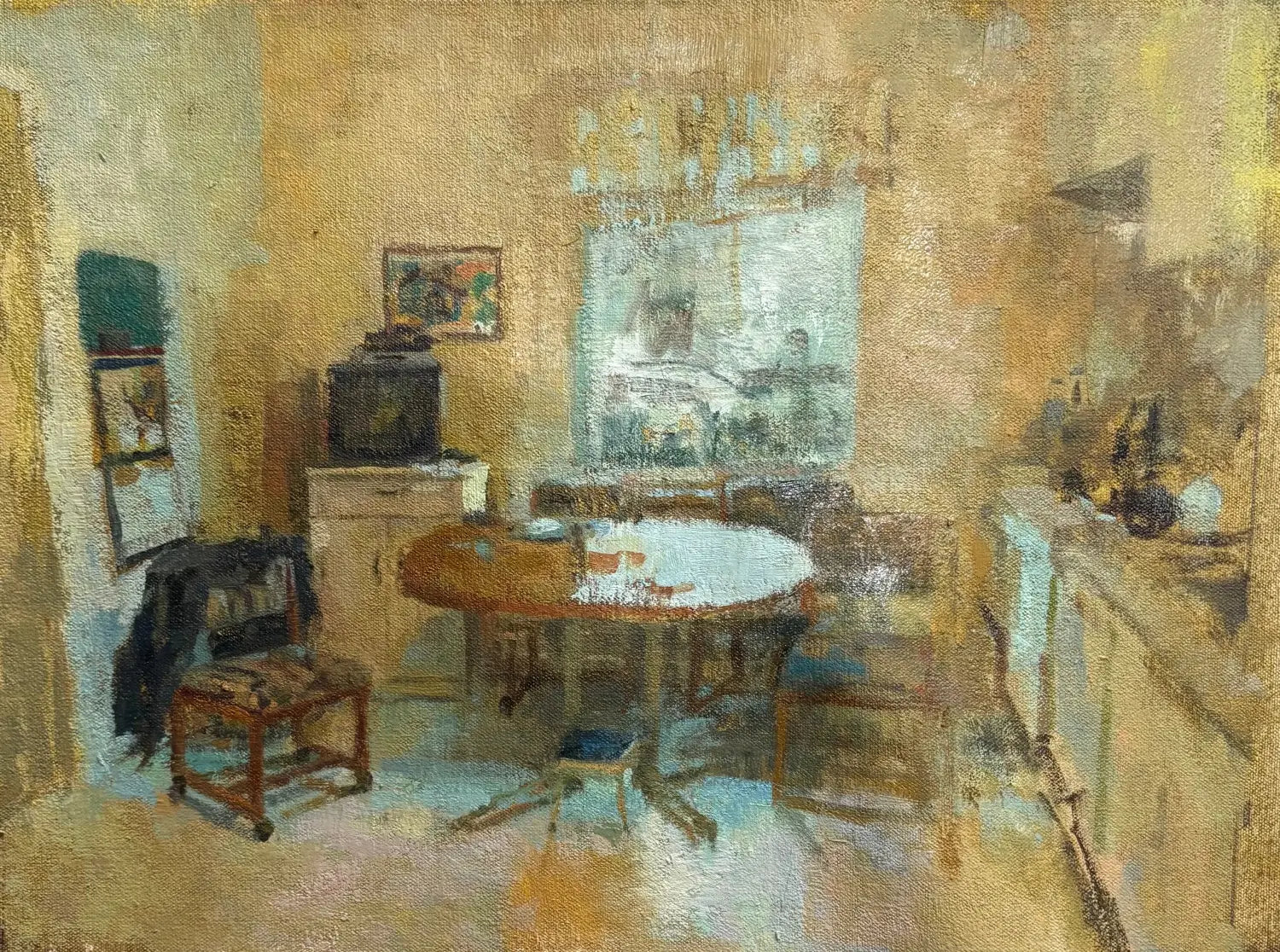
When painting light, it’s important to analyze the color in terms of color temperature. I often talk to myself saying things like, “That color is slightly lighter or warmer than this and it’s sort of a neutral yellow with a pinch of green…” It’s a lot like cooking, a pinch of this or that in varying degrees, will make the color work or not depending on the context of the other colors in the painting. I often tell my students that even if you sense a hint of a particular color within another color, put it in! Maybe gradually at first, and then more so as you develop the painting farther.Don’t be afraid to trust your intuition. It will allow you to be a bolder artist. If it’s wrong, then mix in again, and just lay it on there!
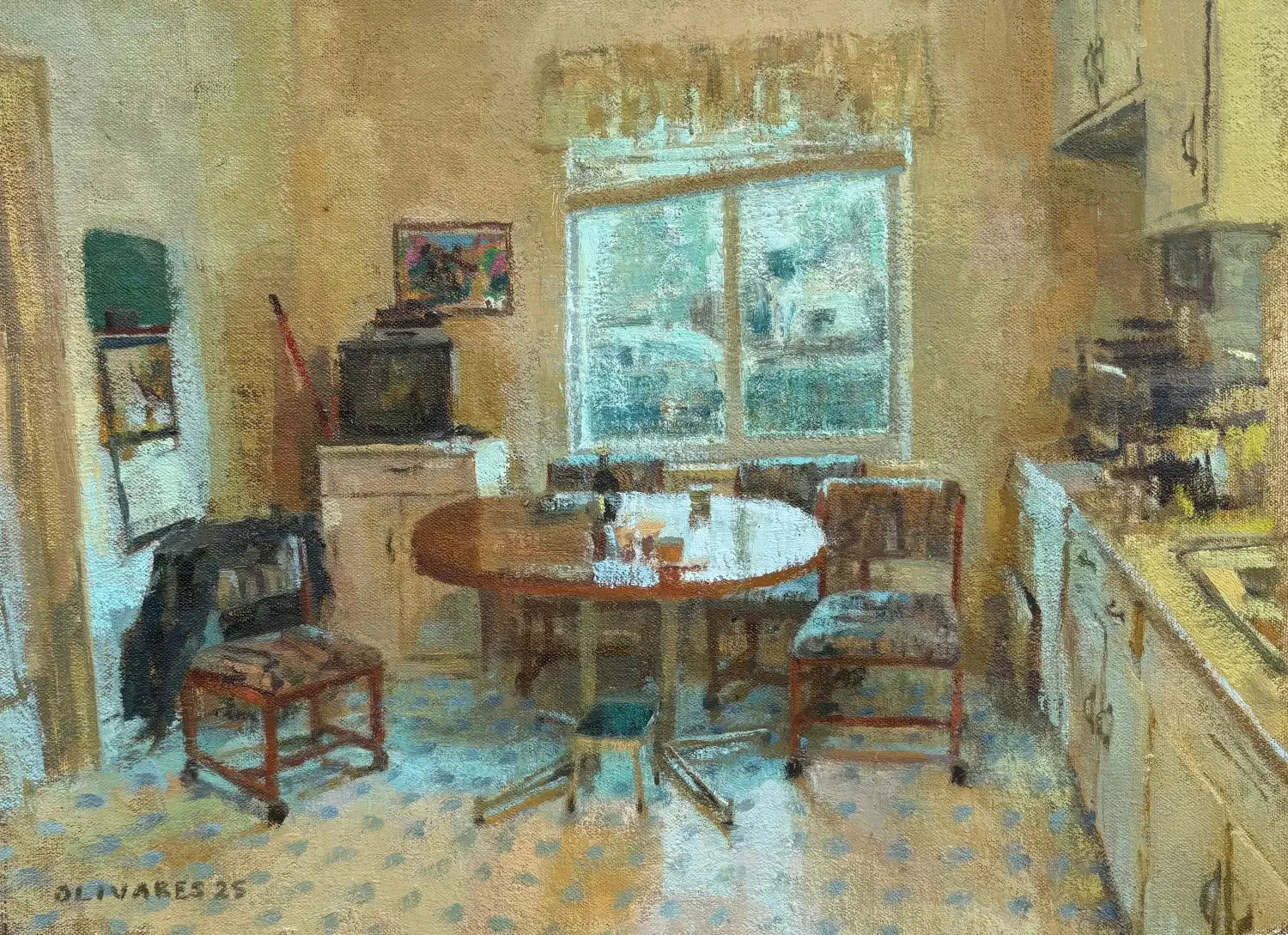
I find painting to be a mix of drawing and sculpting with each stroke developing the forms of the objects. This is why I really love using the Silver Grand Prix hog hair filbert brushes. Much of this painting is drawing with mass and some line, laying in single strokes to convey an edge or plane. I find that the bounce and control is really consistent, so I know what to expect when I lay the mark down. Painting with a steady tool that you can rely on helps you to better envision the brush stroke before it even hits the canvas!


